

I had the great pleasure of sitting down with my friend, Andrew Pla, on the PowerShell podcast and had one of the best conversations I’ve had with anyone in a while. We talked about my Ghost security module, my augmentative and alternative communication app (AAC) called TapSpeak, and community.
One question I didn’t quite answer well, in my opinion, was what it all meant for me and what drives me to do so much for the community - not just the PowerShell community. Not to be a quotation book, but I really do believe in Simon Sinek’s sentiment that if we want to fast we go alone, if we want to go far, we go together. Simon’s line resonates with me because it isn’t just motivational poster material, it’s something I’ve actually lived. And the older I get, the more I understand why it’s true.
I build security tools and give them away for free. I coach kids’ baseball on weekends. I sit on a school board and a planning commission. I built TapSpeak so that kids who can’t speak have a voice, and I made it free because the families who need it most are often the ones who can least afford it. None of those things came with a salary and, frankly, most of them came with extra hours I didn’t really have.
People sometimes ask me how I do it all, but I think that’s the wrong question (like I said logistically - regimented calendar, disciplined execution is the answer to that). The better question is why, and the answer is pretty simple in that I’ve never built anything meaningful by myself.
Every skill I have was handed to me by someone who didn’t have to do it. Someone wrote the blog post I learned from or someone answered a forum question I posted at midnight. Someone gave me a shot when I was still figuring it out. The community I’ve benefited from my whole career was built by people who contributed without keeping score. I’m just paying into the same fund.
There’s also something I’ve noticed across every domain I work in: PowerShell, K12 tech, youth sports, municipal planning, special education. The people doing the most important work are almost never the ones with the most resources. School districts protecting kids’ data on shoestring budgets and parents coaching because no one else showed up. Families navigating AAC devices that cost hundreds or maybe thousands of dollars. If you have knowledge or skill that can change that equation and you don’t share it, that’s a choice with real consequences for real people.
I don’t think of volunteering as charity, I think of it as infrastructure (very much the IT brain of looking at this haha). The communities worth living in, the ones where kids thrive, where professionals grow, where people feel safe, don’t happen by accident. They’re the accumulated result of thousands of small decisions by people who showed up when they didn’t have to.
Going alone is faster. I get and love that; when I was at Amazon, we talked about having a bias for action which is truly valuable in business. But when going fast, I have to ask, fast toward what? I’d rather go somewhere worth being, and that means bringing people with me.
v7.5.5 Release of PowerShell
The latest stable release of PowerShell, which dropped just 16 hours ago, which introduces a variety of engine updates and cmdlet improvements designed to enhance cross-platform stability. This version specifically addresses critical fixes for SSH connectivity and script behavior, including:
Engine Updates: Resolved issues with SSH connection path checks to ensure more reliable remote connectivity.
Cmdlet Fixes: Improved handle management by closing pipe client handles after creating child SSH processes.
Scripting Improvements: Fixed the progress preference variable within script cmdlets to ensure consistent UI feedback.
Build & Infrastructure: Updated the environment to use the .NET SDK 9.0.312 and refactored various GitHub Actions for better CI/CD performance.
https://github.com/PowerShell/PowerShell/releases/tag/v7.5.5
They Don’t Need to Fire You
Jeffrey Snover has a great blog on how companies use a “playbook” of incremental benefit and pay cuts to force natural attrition and avoid the costs associated with formal layoffs. This strategy allows organizations to reduce headcount and lower the cost-per-employee without paying severance or increasing unemployment insurance taxes.
https://www.jsnover.com/blog/2026/03/11/they-dont-need-to-fire-you/
Monad to Millions - Celebrating Jeffrey Snover & the PowerShell Community
Heiko Brenn had a great a special live stream celebration honoring Jeffrey Snover and the global community that grew around the Monad manifesto. The stream reflects on the origins of PowerShell and features stories from community members whose careers and lives were shaped by the platform. Jeff talks about how PowerShell started with the realization that managing Windows is fundamentally different from managing Linux. While Linux is all about text files, Windows relies on APIs and objects. This led to the invention of the object based pipeline, a game changing approach that actually got stronger because of tough internal testing limits. Since the team couldn’t test every single command, they had to build a super reliable engine that could handle metadata, basically turning a technical hurdle into the platform’s biggest win.
The jump from a corporate tool to a global movement happened because of a sacred vow to users. The team promised that any time you spent learning PowerShell would pay off by making you more valuable in your career. Experts like Bruce Payette and Gail Colas talk about how this promise shifted their work away from what they call ClickOps (something I had never heard of before, or at least described that way), which is just tedious manual clicking, and into the world of automation. This didn’t just make things faster; it created a unique community where sharing a script became a way to show off your best ideas and help out people all over the world.
As the industry moves into the AI era, the community is seeing another big shift. Instead of replacing PowerShell, AI is acting like a power-up that helps people write complex code and Pester tests faster than ever. Check this one out of you haven’t already - it’s jam packed. YouTube above, Linkedin where I watched it here:
https://www.linkedin.com/events/monadtomillions-celebratingjeff7425468327407321088/
Creating New Entra ID Users the PowerShell Way

Dennis Johansson has a great article on how to use the Microsoft Graph PowerShell SDK to automate the way you create new user accounts in Entra ID. While most people might just use the standard commands, Dennis explains how to set up the SDK and connect using interactive login or managed identities while sticking to the rule of least privilege. He walks through the prerequisites you need to get started and shares a custom function called New-EntraUser that makes the whole process much smoother.
https://www.cloudidentity.se/blog/creating-new-entra-id-users-the-powershell-way/
How to get better with Graph API - Part one
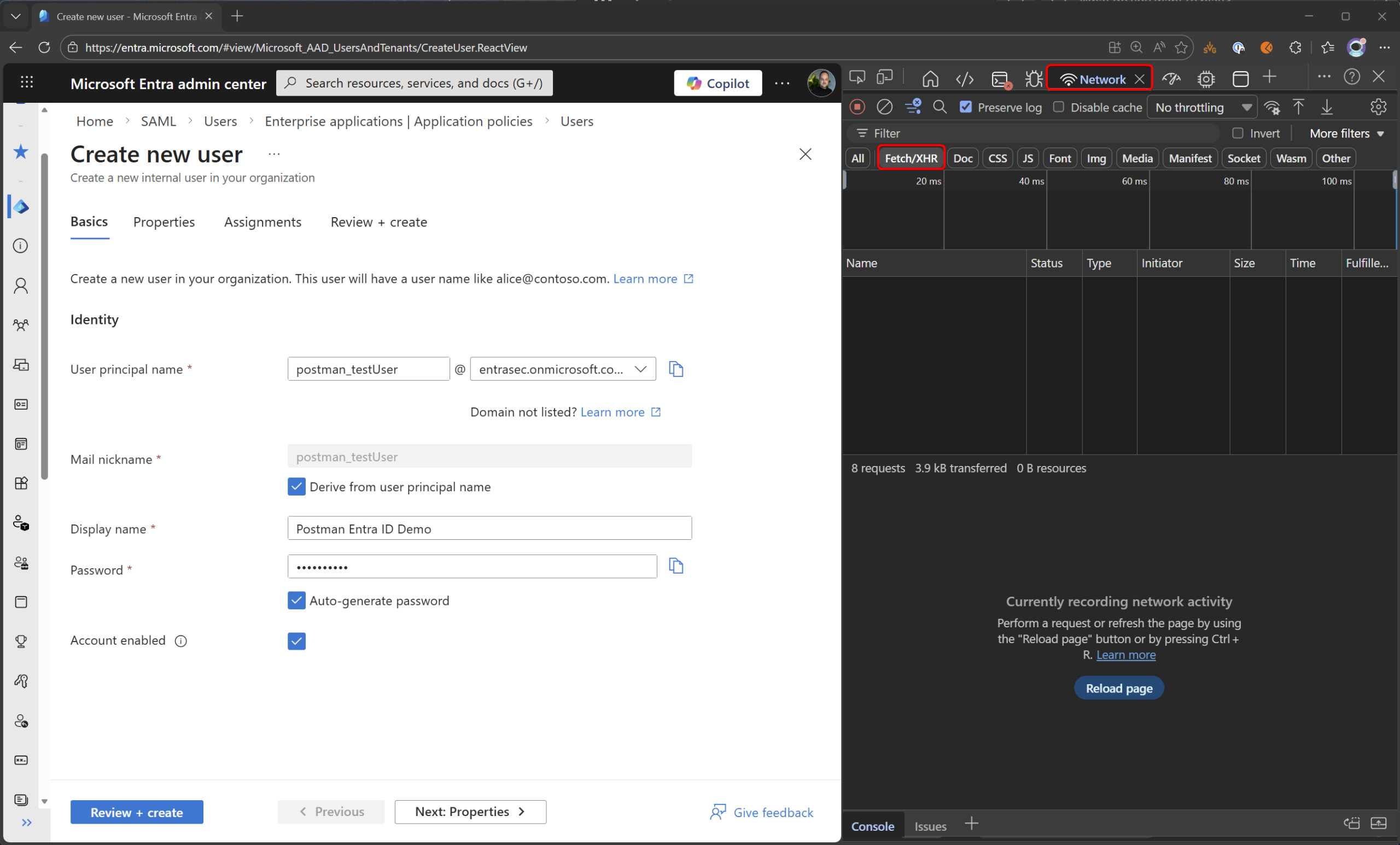
Jan Bakker has a great article on how to master the Microsoft Graph API by using your browser’s developer tools to see what is happening behind the scenes. He explains that almost every action in the Entra or Microsoft 365 admin portals is actually a call to the Graph API. By opening the Network tab and filtering for web requests, you can inspect the exact data being sent and received during common tasks like creating a new user.
https://janbakker.tech/how-to-get-better-with-graph-api-part-one/
The Guy Who Invented PowerShell Is Blown Away By AI
Doug Finke has an interesting video featuring Jeffrey Snover, the inventor of PowerShell, who shares his perspective on how AI is fundamentally changing the way we approach technology and problem-solving. Snover explains that we are entering an era where your existing knowledge can actually become your enemy, as it often limits your understanding of what is now possible. He describes his own experience being blown away by the capabilities of tools like Claude 4.6 and how they have allowed him to make progress on complex projects without needing to spend weeks learning the underlying syntax.
Super Charging your Autopilot Testing with HyperPilot, Autopilot Import GUI and a PowerShell TUI!
Mark Orr has an interesting new article about moving away from the repetitive grind of physical device testing by using community-driven virtualization tools. He explains how testing Intune enrollment configurations, like Autopilot profiles or app deployments, can be supercharged by shifting to a purely virtual workflow using tools like HyperPilot to automate VM creation and the Autopilot Import GUI for a user-friendly registration process.
Getting Started With PowerShell Regular Expressions
Jeff Hicks has an interesting article on how to transition from basic wildcard comparisons to the much more powerful world of regular expressions in PowerShell. He explains that while the -Like operator is great for simple patterns using asterisks, the -Match operator opens up a granular level of string identification that can recognize complex data like Social Security numbers or email addresses. By learning the “foreign language” of regex, scripters can write significantly more efficient code and take full advantage of the $matches variable to extract exactly the data they need.
Upcoming Events
PowerShell + DevOps Global Summit 2026 April 13-17, 2026 in Bellevue, WA - The premier PowerShell community event returns this spring!
https://www.powershellsummit.org/
PSConfEU 2026 June 1-4, 2026 in Wiesbaden, Germany - Call for speakers is now closed.
https://psconf.eu/